
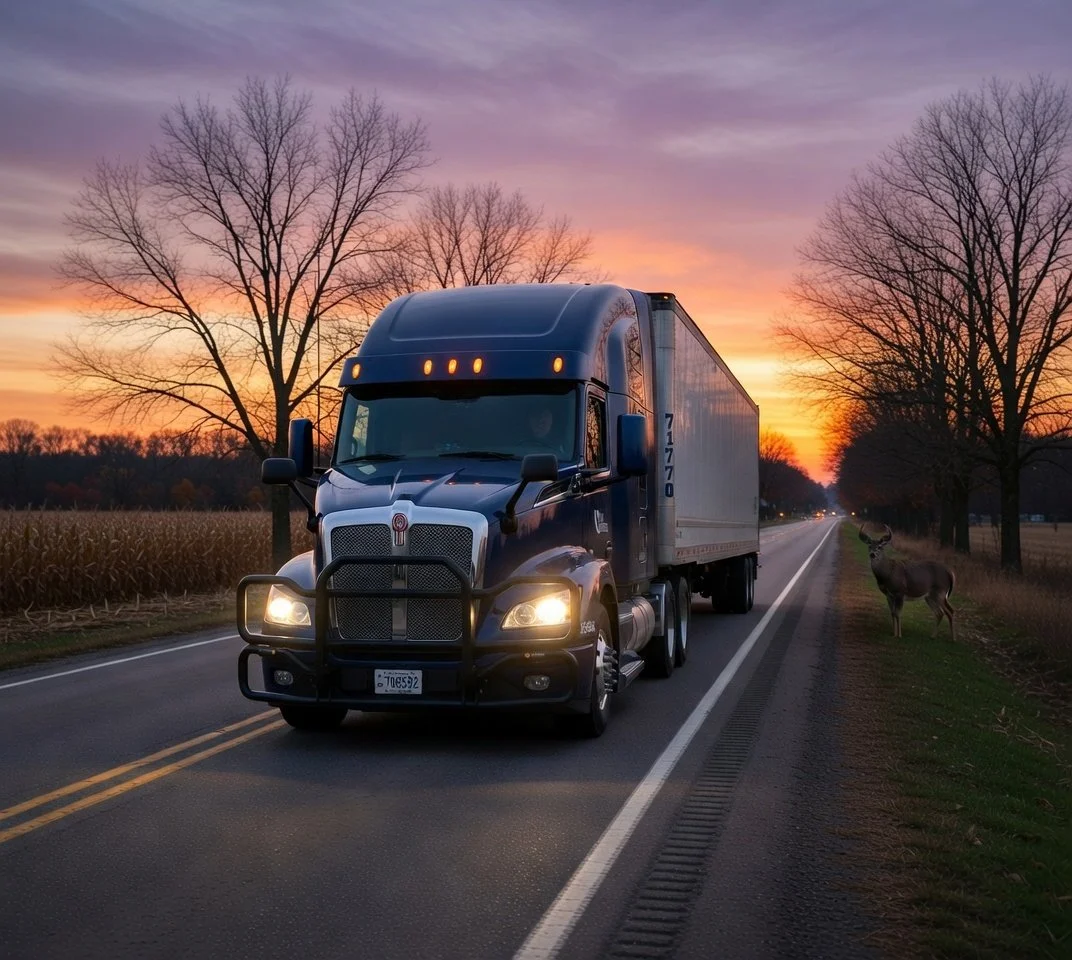
Every November, two things happen at once on the roads we run. The clocks fall back, which this year happened on November 1, and the evening drive turns dark an hour earlier. At the same time, deer are on the move. MnDOT names November as the peak month for deer crashes in Minnesota. The mating season is the main reason, with shorter days and hunting season adding to it.
The numbers back it up. In State Farm’s latest study (July 2024 through June 2025), Wisconsin drivers have a 1 in 58 chance of hitting an animal, the third highest in the country. October through December accounts for about 41 percent of all animal collision claims nationwide, and deer account for more than 1.1 million claims.
What our drivers do:
Slow down at dusk and dawn. Drive at a speed that lets you stop within your headlights.
One deer means more. They travel in groups. If one crosses, expect another right behind it.
Brake, don’t swerve. Brake firmly and stay in your lane. Swerving is how a deer strike becomes a rollover or a head-on crash.
Use your high beams when there’s no oncoming traffic, and watch the ditches for eyes.
Watch the crossing signs. They’re posted where deer actually cross.
Seatbelt, every time.
If you do hit a deer: get to a safe spot and turn on your flashers. Call police if the animal is blocking traffic. Stay away from the animal. Take photos, check your vehicle for leaks or lighting damage before driving on, and call your insurance company.
At MBM Logistics and TLM Express, our drivers put in long miles through some of the highest deer-crash country in the nation, and they make it home safe because they drive like it matters. It does. Slow down, look up, and we’ll see you down the road.